

Knee Ablation Therapy for Chronic Knee Pain Relief
Chronic knee pain can make walking, climbing stairs, or even standing uncomfortable. If medications, physical therapy, or injections have not provided lasting relief, knee ablation therapy may be an effective non-surgical solution.
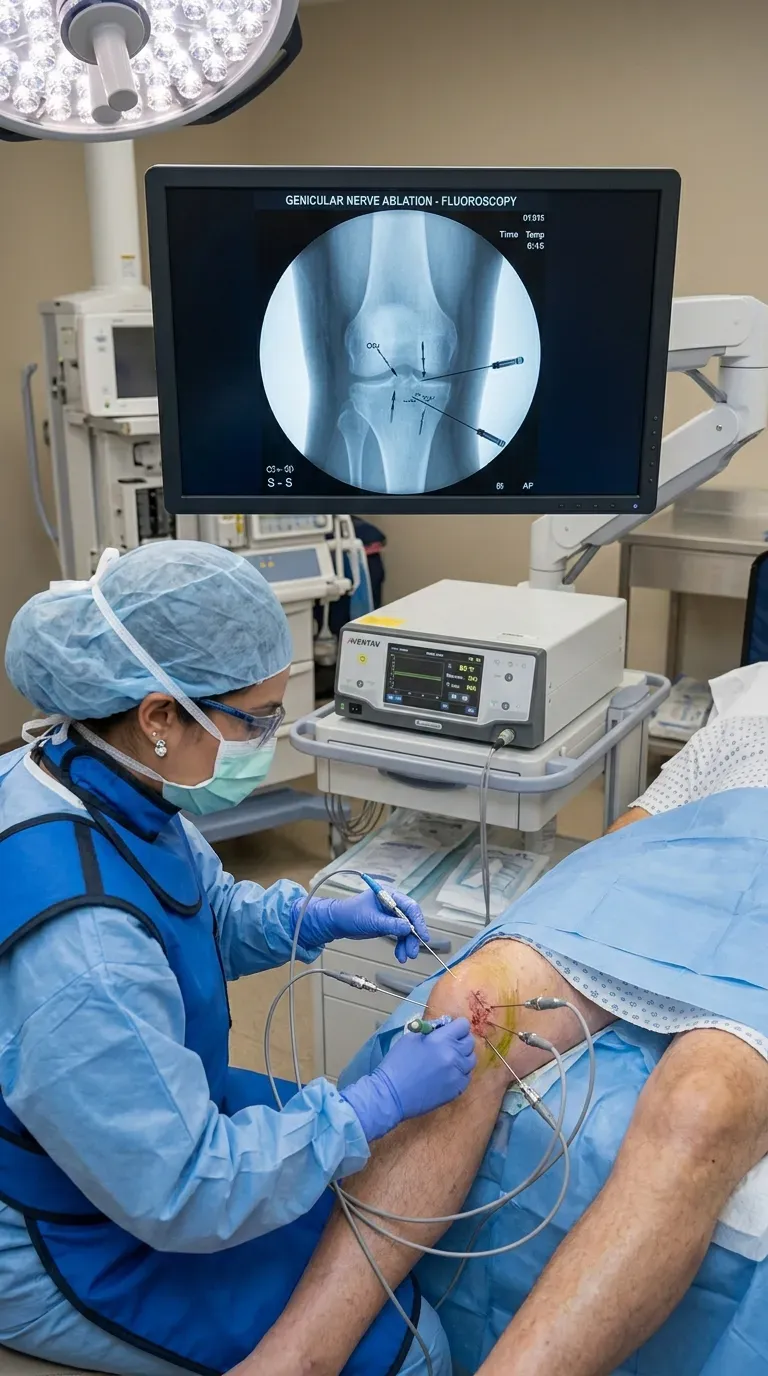
What Is Knee Ablation Therapy?
At Riceland Healthcare, we specialize in advanced knee nerve ablation techniques to help patients reduce pain, improve mobility, and delay or avoid major surgery.
Knee ablation therapy is a minimally invasive treatment that uses Radiofrequency Ablation (RFA) to reduce chronic knee pain. Also known as a knee ablation procedure or nerve ablation for knee pain, this treatment targets the small sensory nerves (genicular nerves) surrounding the knee joint.
These nerves transmit pain signals to the brain. By carefully applying radiofrequency energy, the pain signals are interrupted — providing significant and lasting relief.
This treatment is commonly recommended for patients with:
- Knee osteoarthritis
- Chronic knee degeneration
- Persistent pain after injury
- Ongoing pain after knee surgery
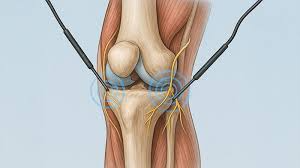
Radiofrequency Ablation
A proven, FDA-cleared technique that precisely targets pain-transmitting nerves around the knee joint using controlled thermal energy.
Radiofrequency Ablation Treatment for the Knee Joint
A minimally invasive procedure that reduces chronic knee pain by targeting specific sensory nerves (genicular nerves).
Precision Guidance
A small needle is precisely placed near the targeted genicular nerves using fluoroscopic (live X-ray) guidance, ensuring accurate targeting for optimal results.
Signal Disruption
Radiofrequency energy is delivered through the needle. Controlled heat creates a small lesion on the nerve, and pain signal transmission is disrupted.
Is Knee Ablation Right for You?
Knee ablation therapy is most effective for patients experiencing chronic knee pain that has not responded to conservative treatments such as medication, physical therapy, or injections. Diagnostic nerve blocks are performed prior to treatment to confirm that the procedure is likely to provide meaningful and lasting pain relief.
Comparing Your Options
Here is how knee ablation compares to knee replacement surgery.
| Feature | Knee Ablation Therapy | Knee Replacement Surgery |
|---|---|---|
| Approach | Minimally invasive | Major orthopedic surgery |
| Admission | Outpatient procedure | Hospital stays required |
| Duration | 30–60 minutes | 1–2+ hours |
| Recovery Time | Short recovery time | Months of recovery |
| Outcome | 6–12 months+ relief | Permanent implant |
Knee ablation is often used to delay knee replacement or provide relief for patients who are not surgical candidates.
Recovery and Outlook
Patients who undergo knee ablation therapy typically experience a quick and comfortable recovery.
Most patients are able to walk the same day and resume regular activities within several days. Full pain relief usually develops over one to three weeks.
"Knee ablation can provide long-lasting benefits, including significant reduction in chronic knee pain, improved mobility, decreased reliance on pain medications, and enhanced quality of life."
Timeline
Significant reduction in chronic knee pain, improved mobility, decreased reliance on pain medications, and enhanced quality of life.
Sustainability
Relief often lasts six months to over a year, and the procedure can be safely repeated if pain returns.
Benefit
An effective, minimally invasive alternative for patients seeking relief from chronic knee pain without surgery.
Schedule Your Knee Ablation Consultation
Contact Riceland Healthcare today to schedule a consultation and learn whether knee nerve ablation is right for you.
Book AppointmentFrequently Asked Questions
Find answers to common questions about Knee Ablation Therapy